 Smooth Air
Should I tell the flight attendant I'm scared of flying?
Yes, telling the flight attendant that you are scared of flying is a reasonable step, and one calm sentence at boarding is enough; you do not need a diagnosis. Know what it can and cannot do. Crew decide what they are able to offer, and ANA, for one, states that its cabin crew cannot perform medical acts or individual care on board. It gives someone on the plane context if your anxiety rises.
What can you say at boarding?
Keep it short and specific. These are suggested wordings, not rules:
- “I’m a nervous flyer. Could you let me know if anything changes?”
- “Takeoff and bumps are the hard parts for me. I’ll tell you straight away if anything feels physically different.”
- To ask about sounds or bumps: “Could you tell me when the seat belt sign is likely to come on?”
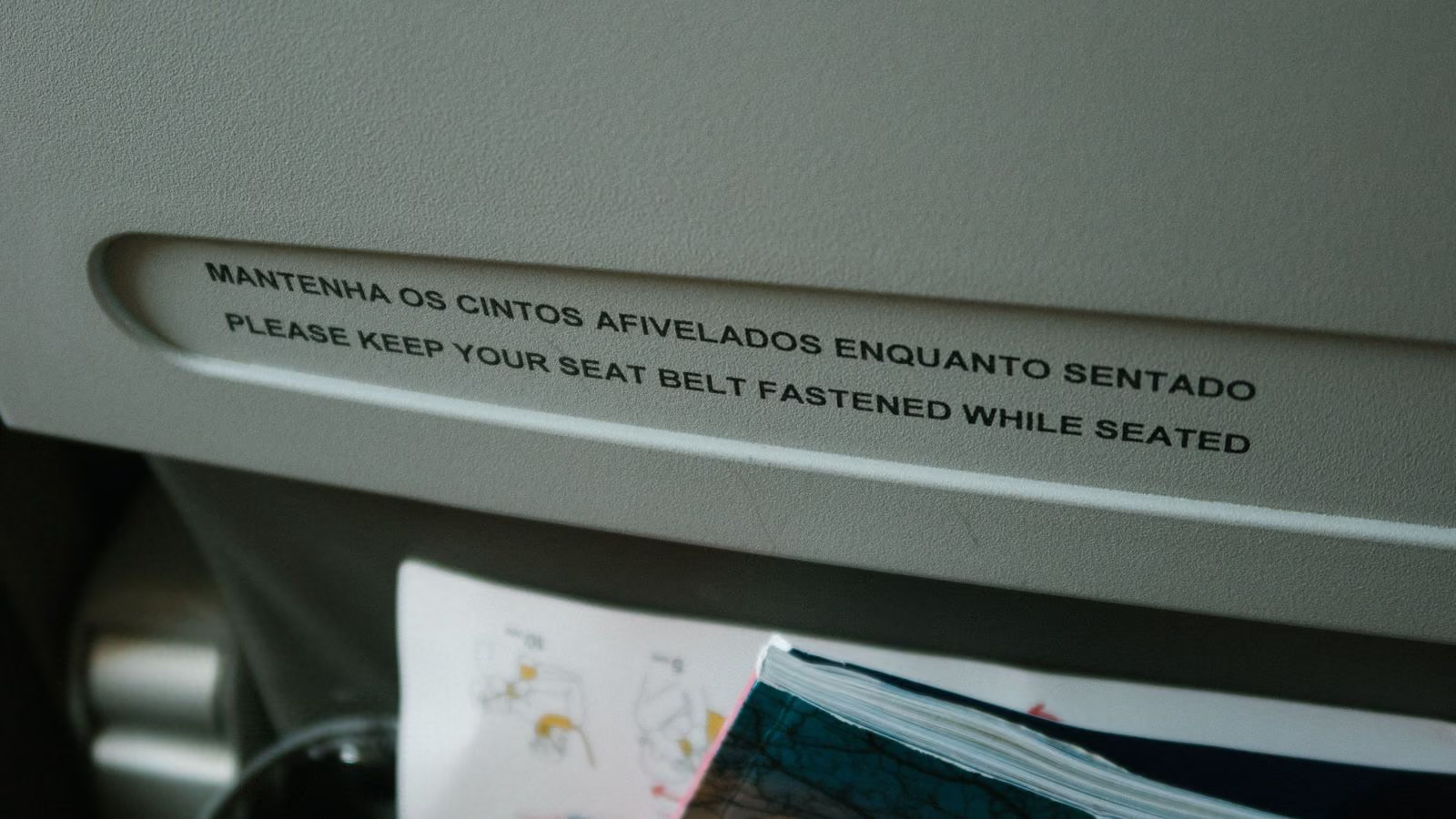
The last request is worth a try, though nothing promises it. Nobody on board can promise you will get notice of turbulence. What EASA does say is that turbulence is harmless most of the time because planes are built to withstand extreme conditions, and that the real safety risk is passengers ignoring crew instructions to keep the seat belt on. So following the crew on belts is part of the deal, not a side issue. For the bumps themselves, see our guide to how turbulence works.
What can crew do, and what can’t they?
Be realistic. In the US, airlines under Part 121 must train crew in emergency medical event procedures. That rule covers medical events. It does not say crew are trained for anxiety, and we found no source that does. ANA’s statement concerns its own limits on medical acts and individual care; it does not establish the qualifications of every crew member.
So treat the conversation as a request for attention and information. You can ask:
- whether a different seat is available. No source promises one.
- whether a crew member can check on you once during the flight.
Whether any of that happens is up to the crew and the airline that day. They may not be able to meet every request.
What can you do before you fly?
One airline example is JAL’s guide for people anxious about travel. ANA invites passengers with questions or worries to contact a consultation desk, but it is for passengers with physical disabilities, not for fear of flying. JAL has published a Q&A handbook, Beyond Guide, built from the real voices of people anxious about travel, covering each step of boarding and how to cope with difficulties. It was written for wider needs than fear of flying. Check your own airline’s website: we have not verified policies for other carriers.
Smooth Air includes breathing practices. If you use the app, consider choosing a practice before boarding rather than searching during a difficult moment. Choosing one is not a way to treat anxiety or check your flight’s safety.
When should you speak up at once?
If a symptom is new or severe, tell the crew now. The NHS says most panic symptoms can also be symptoms of other conditions, so what feels like panic may be something else. Describe the symptom plainly, such as “I have chest pain” or “I can’t catch my breath”, instead of calling it anxiety. Chest pain deserves a fast response: the NHS advises you to get immediate medical help if you think you are having a heart attack.
While you wait, the NHS suggests breathing in through the nose and out through the mouth, gently and regularly, with an optional count from 1 to 5, as in its breathing exercise. For on-board steps, see our guide on what to do if you panic on a plane. If fear is stopping you from flying at all, talk to a doctor about support.
Common questions
Will the pilot talk to me if I'm scared?You can ask a flight attendant whether it is possible. We found no source saying pilots speak to passengers on request, and they have duties during boarding and flight. A flight attendant can tell you what your airline allows, though a conversation may not be possible.
Can I get a seat change if I'm scared?You can ask politely at check-in, at the gate or at boarding. Whether a seat is free, and whether crew can move you, is up to the airline on the day, and we found no source promising it. Stay in your assigned seat until you are told you can move.
What should I not tell the crew?You do not need to share a diagnosis or your history. Keep it to what you feel and what would help. If a symptom is new or severe, describe it plainly instead of calling it anxiety, because the NHS notes that panic symptoms can also be symptoms of other conditions.
Do crew get trained for anxious passengers?We could not confirm that. A US rule requires airlines under Part 121 to train crew in emergency medical event procedures, which is a medical-event rule and not anxiety training. One Japanese airline states its cabin crew cannot perform medical acts. Ask what they can do, and expect it to vary by airline.
Sources
Support without internet
Use Smooth Air to explore aircraft sounds and keep self-help practices ready for your flight. Not treatment or a safety check.